
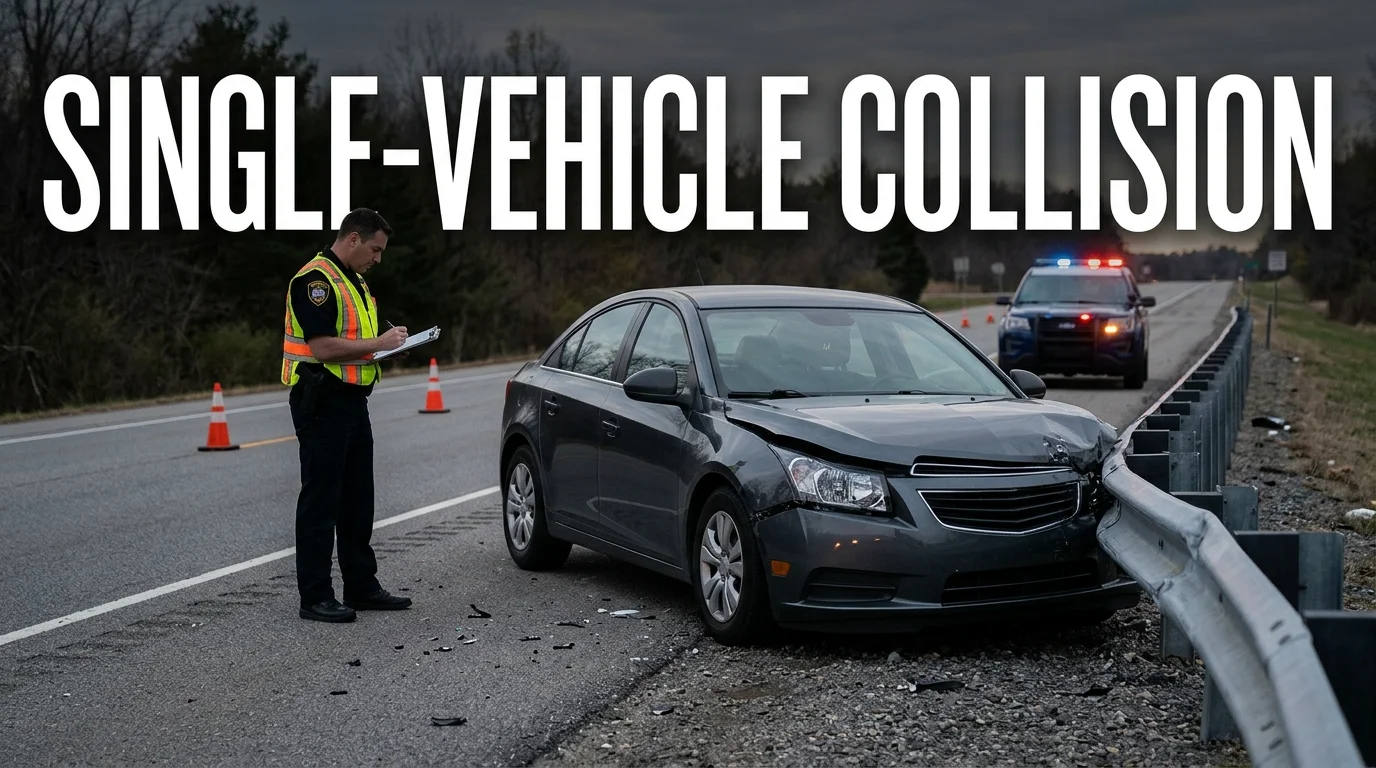
A single-vehicle collision involves one motor vehicle, not two moving vehicles striking each other. The crash may involve a guardrail, tree, animal, ditch, pedestrian, or fixed object. Fault and insurance coverage depend on what caused the incident and the policy involved.
Direct answer: A single-vehicle collision usually involves one motor vehicle losing control, leaving the roadway, rolling over, or striking something other than another motor vehicle. The driver is often considered responsible, but road defects, vehicle failures, animals, or another driver’s actions can change liability and insurance options.
| Key point | What U.S. drivers should know |
|---|---|
| Basic meaning | One motor vehicle is involved in the crash event |
| Common examples | Rollovers, roadway departures, trees, poles, guardrails, animals, and ditches |
| Driver fault | Common, but not automatic in every case |
| Own vehicle damage | Collision or comprehensive coverage may apply, depending on the cause |
| Damage to other property | Property damage liability may cover qualifying damage |
| Injuries | PIP, MedPay, health insurance, or liability coverage may apply |
| Police reporting | Requirements vary by state and crash circumstances |
| Evidence | Photos, witnesses, road conditions, and vehicle inspections can matter |
| Legal rules | State law affects fault, reporting, claims, and recovery |
Key Takeaways
- A one-car crash does not automatically prove that the driver was legally responsible.
- Collision coverage commonly addresses damage caused by hitting objects or rolling over.
- Comprehensive coverage may apply to events such as certain animal strikes.
- Liability insurance can address property damage caused to someone else’s property.
- State reporting rules differ, so drivers should check local requirements.
- Road defects, mechanical failures, or another motorist can sometimes affect responsibility.
- Prompt documentation can make later insurance or legal questions easier to resolve.
What Is a Single-Vehicle Collision?
Federal crash-reporting materials use single-motor-vehicle classifications when only one motor vehicle is involved. The first harmful event may involve a pedestrian, animal, fixed object, or another non-motorized object. The exact reporting definition can vary between agencies and states.
A common example is a driver losing control and striking a guardrail. Other examples include rollovers, ditch departures, utility-pole impacts, and wildlife collisions. These incidents can occur without another vehicle making physical contact.
The distinction matters because insurance coverage depends partly on how the loss happened. The National Highway Traffic Safety Administration provides federal traffic-safety information and crash data. State agencies may use additional definitions for police reports and insurance purposes.
What Causes a One-Vehicle Crash?
Driver behavior is one possible cause, but it is not the only explanation. Weather, roadway conditions, mechanical problems, and unexpected hazards can also contribute. Investigators usually consider the circumstances rather than relying only on the final vehicle position.
Common contributing factors can include the following.
- Excessive speed for road or weather conditions.
- Distracted or fatigued driving.
- Impaired driving.
- Wet, icy, or snow-covered pavement.
- Sharp curves or poor visibility.
- Swerving to avoid an animal.
- Road debris or unexpected obstacles.
- Tire or mechanical failure.
- Potholes or dangerous roadway conditions.
- Actions by another driver who never made contact.
Vehicle condition can also affect how a crash develops. Worn tires, faulty brakes, and suspension problems may reduce a driver’s ability to maintain control. WritingE’s guide to key services every car owner should know explains several systems that affect handling and safety.
Is the Driver Always at Fault?
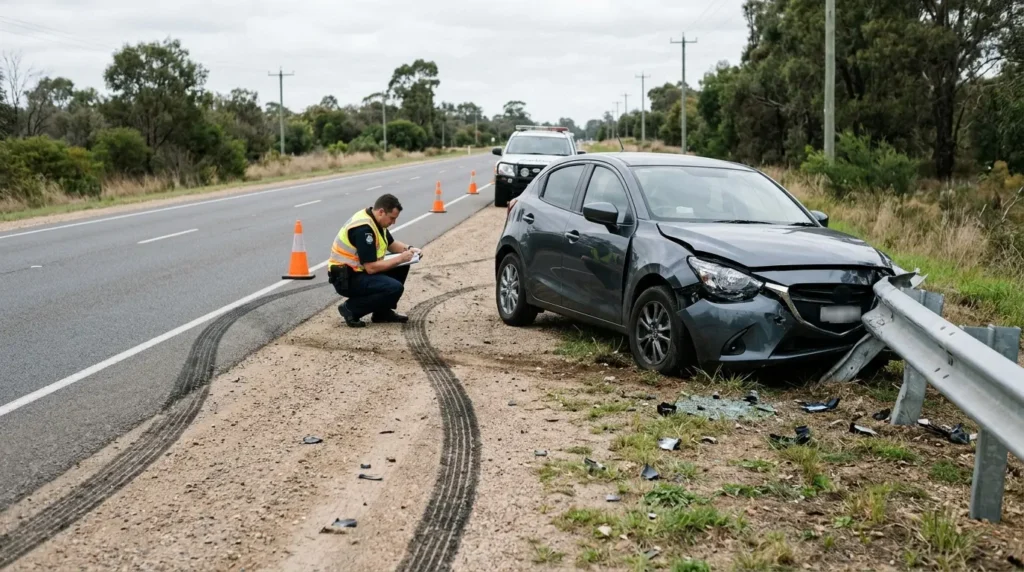
No rule makes a driver automatically liable merely because only one vehicle crashed. Driver error causes many one-car incidents, so insurers often investigate whether the motorist lost control. Evidence can sometimes point to another cause.
Imagine a vehicle swerves because an oncoming driver crosses the center line. The first vehicle may leave the road without hitting the second car. Witnesses, video, skid marks, and other evidence can matter when determining responsibility.
Defective vehicle components can create another possible liability issue. Dangerous road design or negligent maintenance may also matter in certain cases. These situations can involve complex state laws and strict claim deadlines.
Who Could Be Responsible Besides the Driver?
Several parties can potentially contribute to a one-car crash. Responsibility depends on evidence, state law, and the specific facts. A driver should not assume the absence of vehicle-to-vehicle contact ends the investigation.
Possible responsible parties may include the following.
- Another motorist whose actions forced an evasive maneuver.
- A manufacturer responsible for a defective vehicle or component.
- A repair business that performed negligent work.
- A government entity responsible for certain dangerous roadway conditions.
- A property owner responsible for a dangerous condition in limited circumstances.
Claims involving government agencies can have special notice requirements and shorter deadlines. Product-defect cases may require preserving and inspecting the damaged vehicle. Drivers facing serious injuries should consider qualified legal advice in their state.
For broader U.S. legal background, WritingE’s guide explaining how case law works shows why jurisdiction matters. State statutes and court decisions can produce different outcomes from similar facts.
What Insurance Covers a One-Car Accident?
The answer depends on what happened and which coverages you purchased. Minimum liability insurance usually does not pay for repairs to your own vehicle. Optional physical-damage coverage can provide broader protection.
| Type of coverage | What it may cover |
|---|---|
| Collision coverage | Your vehicle after hitting an object, overturning, or another covered crash |
| Comprehensive coverage | Certain non-collision losses, including many animal strikes and weather events |
| Property damage liability | Damage you legally owe for another person’s property |
| Bodily injury liability | Qualifying injuries you cause to other people |
| MedPay | Covered medical expenses for you or passengers |
| Personal injury protection | Covered medical costs and other losses where available |
| Health insurance | Medical treatment subject to your health plan’s terms |
Collision coverage can pay for damage after hitting stationary objects. It is not required by every state. A lender may require it on a financed or leased vehicle.
The Insurance Information Institute also separates collision coverage from liability coverage. Liability coverage addresses legal responsibility to others. Policy language, deductibles, exclusions, and state requirements still control an individual claim.
What Happens If You Hit a Pole, Fence, or Guardrail?
Your vehicle and the object you hit create two separate insurance questions. Collision coverage may address your car, subject to your deductible and policy terms. Property damage liability may address property belonging to someone else.
A utility pole, guardrail, mailbox, fence, or building can have an identifiable owner. Leaving without taking appropriate steps can create legal problems under state law. Reporting duties depend on the location, damage, and applicable state rules.
Photograph the object and surrounding area when it’s safe to do so. Record ownership information if it is available. Give responding officers and your insurer accurate facts, and avoid guessing about uncertain details.
What Should You Do After a Single-Car Crash?
Your first priority is safety, not determining fault. Injuries, moving traffic, fire, or leaking fluids can create immediate risks. Call 911 when emergency assistance is needed.
Then follow these practical steps:
1. Move to safety when possible. Avoid remaining in an active traffic lane unless moving would create greater danger.
2. Check for injuries. Request emergency medical help when anyone may be seriously hurt.
3. Contact law enforcement when required. State reporting thresholds and requirements differ.
4. Photograph the scene. Capture the vehicle, roadway, signs, damage, weather, debris, and surrounding objects.
5. Get witness information. Independent witnesses can help explain why the vehicle left its path.
6. Preserve relevant evidence. Do not immediately discard a failed tire or damaged component when a defect may matter.
7. Notify your insurer. Review your policy and provide factual information about the event.
8. Keep records. Save reports, towing bills, repair estimates, medical documents, and claim correspondence.
Drivers interested in general vehicle information can also browse WritingE’s Automobile section. Its coverage includes maintenance, vehicle features, and ownership topics. Those resources can help owners understand systems that affect vehicle performance.
Should You Report the Crash to Police?
There is no single nationwide reporting threshold for every traffic accident. States set their own rules based on injuries, deaths, property damage, and other factors. Local police procedures can also affect what happens at the scene.
Call emergency services when someone is injured or immediate hazards exist. Reporting is also sensible when public or private property has been damaged. Drivers should check their state’s motor vehicle agency for specific reporting requirements.
A police report does not automatically decide civil liability. Insurers and courts can consider additional evidence when fault is disputed. Still, the report can provide useful information about the scene and people involved.
Can a One-Car Accident Raise Insurance Rates?
It can, particularly when an insurer treats the event as an at-fault loss. The effect depends on the insurer, state rules, driving history, claim amount, and available accident-forgiveness features. No universal percentage applies to every driver.
Comprehensive claims may be treated differently from at-fault collision claims. For example, an animal strike may fall under comprehensive coverage on many policies. Always check the exact policy rather than assuming every one-car event is classified alike.
A deductible also affects whether filing a vehicle-damage claim makes financial sense. Compare the estimated repair cost with your deductible before deciding. Policy notification duties may still apply even when you later pay for repairs yourself.
When Should You Consider Legal Advice?
Minor property damage involving only your vehicle may not require an attorney. Serious injuries or disputed responsibility can present different issues. The same is true when another person, company, or public agency may have contributed.
Legal advice may be useful when:
- You or a passenger suffered a serious injury.
- Another driver’s actions forced you from the road.
- A defective vehicle component may have caused the crash.
- Dangerous road conditions appear important.
- An insurer disputes coverage or responsibility.
- Public property or a government agency is involved.
- Significant damages exceed available insurance limits.
Injury claims are particularly sensitive to state-specific deadlines and liability rules. WritingE also publishes material about brain injuries and accident claims. That page illustrates why serious injuries often require more detailed medical and legal evaluation.
Frequently Asked Questions
What counts as a single-vehicle collision?
It generally describes a crash involving only one motor vehicle. The vehicle might strike a tree, barrier, animal, pedestrian, ditch, or other object. Reporting definitions can differ by state and agency.
Is a single-car crash always considered at fault?
No, although driver error is a common explanation in these cases. Another motorist, a defective component, or a hazardous roadway can sometimes contribute. Insurers examine available evidence before making coverage and fault decisions.
Does liability insurance pay for my damaged car?
Liability coverage generally pays qualifying losses that you legally cause to others. It normally does not repair your own vehicle after an at-fault crash. Collision coverage typically covers that type of vehicle damage.
Does comprehensive insurance cover hitting a deer?
Animal strikes are commonly handled under comprehensive coverage rather than collision coverage. Exact treatment depends on your insurer and policy language. Confirm the classification directly with your insurance carrier.
Do I need a police report if no other car was involved?
Possibly, because state laws set different reporting requirements. Injury, substantial property damage, or damage to public property may trigger reporting obligations. Check your state’s motor vehicle or law-enforcement guidance.
Can another driver be liable without hitting my vehicle?
Yes, physical contact is not always necessary for another driver’s actions to matter. Evidence must connect that driver’s conduct to the crash. Witnesses, cameras, vehicle data, and scene evidence can become important.
The Bottom Line
A one-vehicle crash can look straightforward while raising complicated insurance and liability questions. Driver error is common, but it is not the only possible cause. Evidence and policy details usually determine what happens next.
Focus first on safety, medical needs, documentation, and required reporting. Then review the incident with your insurer using accurate facts and preserved evidence. Seek state-specific professional advice when injuries or disputed liability create significant consequences.
For more vehicle ownership and safety information, visit WritingE’s Automobile resources. Keep your insurance documents and vehicle records accessible before an emergency occurs. Preparation can make a stressful claim easier to manage.