
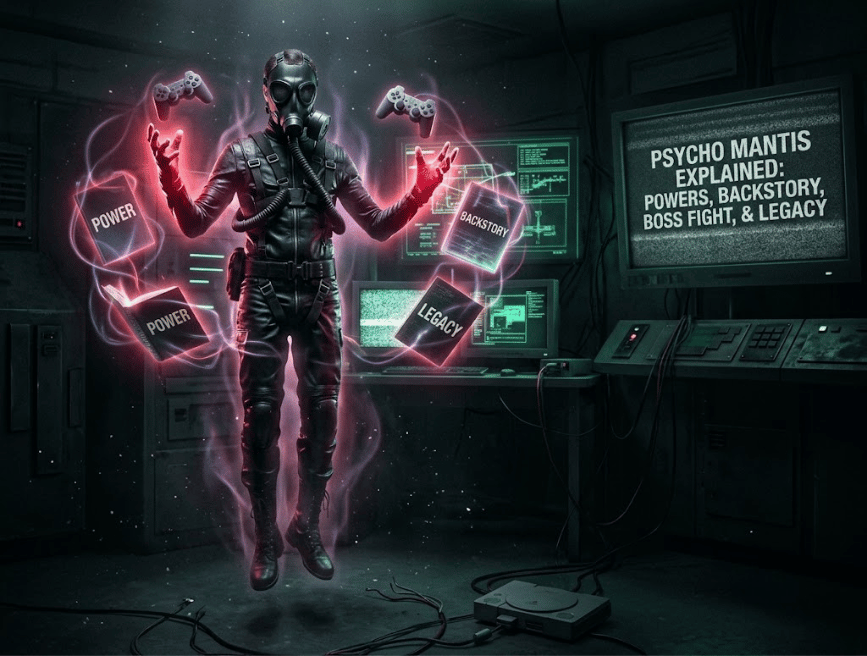
Psycho Mantis is one of the most recognizable villains from Metal Gear Solid. The psychic FOXHOUND member can read minds, control objects, and manipulate people. Yet his unforgettable boss battle made him famous far beyond the game’s story.
Direct answer: Psycho Mantis is a psychic FOXHOUND operative introduced in Metal Gear Solid in 1998. He uses telepathy and psychokinesis against Solid Snake. His boss fight became famous because the game reads player behavior, checks save data, moves the controller, and turns the PlayStation hardware into part of the puzzle.
| Quick fact | Details |
|---|---|
| Character | Psycho Mantis |
| Series | Metal Gear |
| Major debut | Metal Gear Solid |
| Original release | 1998 |
| Affiliation | FOXHOUND |
| Main abilities | Telepathy and psychokinesis |
| Main opponent | Solid Snake |
| English voice actor | Doug Stone |
| Famous boss mechanic | Switching controller ports |
| Later connection | Tretij Rebenok in Metal Gear Solid V |
Key Takeaways
- He is a psychic member of Liquid Snake’s FOXHOUND unit.
- His abilities include telepathy, psychokinesis, and mental control.
- His childhood helps explain his hatred and emotional instability.
- His 1998 boss battle directly interacts with the player.
- The original solution involves moving the controller to port two.
- Modern releases recreate the hardware trick through software menus.
- His influence comes from both strong characterization and inventive game design.
Who Is Psycho Mantis in Metal Gear Solid?
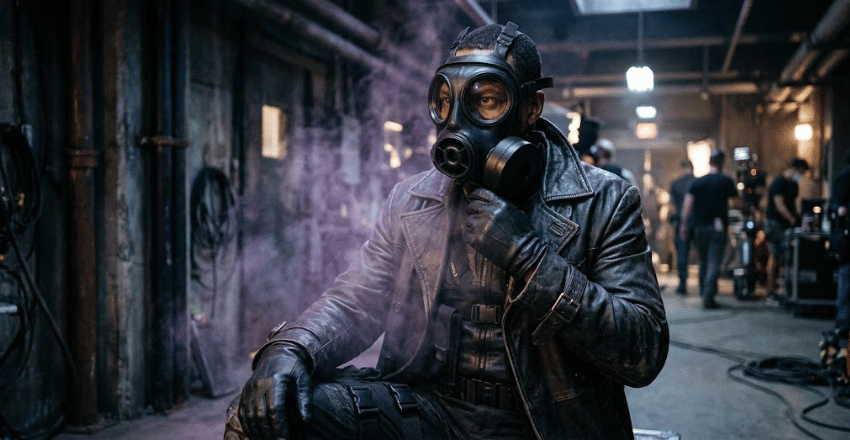
Psycho Mantis appears as a major FOXHOUND member during the Shadow Moses incident. He serves alongside Liquid Snake and confronts Solid Snake during the infiltration. His supernatural abilities set him apart from the military specialists around him.
Mantis can enter minds and sense thoughts through telepathy. He also moves physical objects through psychokinesis and can control another person’s actions. These powers become central when he takes control of Meryl Silverburgh.
His abilities are more than ordinary story details. The game represents his psychic powers through mechanics that affect the person holding the controller. This choice turns his encounter into a confrontation between Mantis and the player.
Readers interested in other unusual fictional characters can explore Writinge’s Spider-Byte coverage. Margo Kess also connects technology with identity in an unconventional way. Both characters challenge familiar boundaries between physical and digital worlds.
What Powers Does Psycho Mantis Have?
Telepathy is his defining ability throughout the original game. He reads thoughts, predicts actions, and uses mental information against his opponents. This explains why normal attacks initially struggle to hit him.
Psychokinesis gives him a second major advantage. He can move furniture, artwork, and other objects without touching them. During combat, those objects become dangerous projectiles that force Snake to keep moving.
Mental control may be his most disturbing ability. He takes control of Meryl and forces her to threaten Snake. The scene establishes his danger before the actual boss battle begins.
His powers also support the game’s unusual fourth-wall tricks. The software examines player behavior and presents that information as psychic knowledge. The result makes his supernatural abilities feel personal instead of purely fictional.
The Tragic Backstory Behind the Mask
Mantis describes a childhood shaped by fear, isolation, and unwanted knowledge. His mother died while giving birth to him. His father blamed the child for her death and carried intense resentment.
The young psychic eventually discovered those feelings by reading his father’s mind. The experience overwhelmed him and contributed to a destructive reaction. His village burned, leaving him with an even darker view of humanity.
Later material connects him with intelligence work involving the Soviet KGB and American FBI. His telepathic abilities exposed him to disturbing thoughts from other people. Contact with violent minds further damaged his already unstable emotional state.
This history helps explain why his powers function as a burden. He cannot simply hear pleasant thoughts whenever he chooses. Human anger, hatred, and fear repeatedly shape his worldview.
Why the Psycho Mantis Boss Fight Became Legendary
The battle is remembered because it refuses to behave as an ordinary boss encounter. Mantis does not limit his tricks to Snake or the room around him. Instead, the game reaches beyond its fictional setting and interacts with the player.
On the original PlayStation, Mantis can comment on player habits stored by Metal Gear Solid. He may discuss how often someone saves or how cautiously they play. Certain Konami save files can also trigger additional comments.
The DualShock controller becomes another part of his performance. Mantis tells players to place it on a flat surface. The vibration motors then make the controller move, supporting his claim of psychokinetic power.
The game also creates a fake television interruption during the encounter. A black screen and the word “HIDEO” can make players think something went wrong. The trick references series creator Hideo Kojima while strengthening the illusion.
That combination made the encounter unusual even among experimental games. Academic discussions of game design have since examined its fourth-wall techniques. The battle demonstrates how hardware itself can become part of interactive storytelling.
How Do You Beat Psycho Mantis?
The original PlayStation solution is famous because it happens outside the game world. Mantis appears able to predict every move coming from the first controller port. Moving the controller to another port prevents him from reading those inputs.
Once that connection is broken, players can attack him normally. His movement remains fast, and he still throws objects around the room. Thermal Goggles can also help track him when stealth camouflage makes him difficult to see.
Players must first deal with Meryl without killing her. Nonlethal methods can interrupt his control and continue the encounter. After that stage, the battle focuses directly on Mantis.
An alternate method exists if the controller-port trick cannot be used. Repeated Codec conversations can eventually reveal another solution involving objects in the room. This makes the encounter possible even when hardware circumstances differ.
For more classic role-playing and console coverage, readers can visit Writinge’s Baldur’s Gate Switch guide. That guide offers more character and gameplay detail.
How the Master Collection Handles the Famous Trick
Modern systems no longer have the original PlayStation’s two physical controller ports. That created an obvious problem for newer versions of the game. Removing the mechanic entirely would weaken one of its most famous encounters.
Metal Gear Solid: Master Collection Vol. 1 solves the problem with virtual controller settings. Players can simulate changing controller ports through an in-game menu. This recreates the original puzzle logic without requiring old hardware.
The collection also recreates elements of Mantis reading saved games. Virtual save data can be created for supported titles. That preserves part of the original mind-reading performance for modern players.
The solution shows why this fight remains difficult to preserve. Its design depends on technology outside the fictional room where Snake stands. Each new platform must reinterpret that software-hardware relationship.
Why the Fight Works So Well
Most boss battles teach players to recognize attack patterns and exploit weaknesses. This encounter initially punishes that exact approach. The enemy appears capable of responding to whatever the player attempts.
The solution therefore requires a different kind of reasoning. Players must question the assumptions created by the game itself. The controller stops being an invisible tool and becomes a mechanic.
That shift also strengthens the character. Mantis does not merely claim to possess supernatural abilities. The player experiences tricks designed to make those claims briefly feel plausible.
Few villains get such a close connection between personality and gameplay. His powers, presentation, and mechanics all reinforce one another. That unity helps explain why the encounter remains widely discussed decades later.
His Connection to Metal Gear Solid V
A younger psychic appears in Metal Gear Solid V: The Phantom Pain as Tretij Rebenok. The character demonstrates extraordinary psychic abilities long before the Shadow Moses incident. He is also strongly influenced by the powerful emotions around him.
The younger character’s mask and powers make his identity recognizable to series followers. His story gives players more context for abilities seen in the 1998 game. It also shows how emotional forces can affect his actions.
This connection expands him beyond a single memorable boss encounter. His later appearance in the timeline links his psychology to earlier events in the series. Players can therefore view the original battle with additional background.
Why the Character Still Matters
Mantis remains memorable because he represents something games can do differently from films or books. A movie character cannot examine a viewer’s controller port. A conventional novel cannot react to save data stored beside another story.
Games can make the audience’s actions part of the fiction. The 1998 encounter uses that capability for surprise, humor, tension, and misdirection. It turns familiar equipment into evidence of a fictional character’s powers.
The idea influenced how players discuss fourth-wall-breaking game design. Developers have created many later moments that acknowledge saves, menus, controllers, and player choices. Few have matched the surprise produced by encountering these techniques on the original PlayStation.
Writinge readers who enjoy character lore can also explore its White Walker guide. That article examines another memorable fictional threat through powers, origins, and weaknesses. Both topics show how strong rules help fictional villains remain memorable.
Frequently Asked Questions About Psycho Mantis
Is Psycho Mantis really psychic?
Within the Metal Gear story, he possesses genuine psychic abilities. These include telepathy, psychokinesis, and mental control. The games represent those powers through both story events and unusual gameplay mechanics.
Why does Psycho Mantis read your memory card?
The original PlayStation game checks compatible save data to strengthen the illusion that Mantis can read the player’s mind. He can recognize certain Konami games saved on the memory card. The trick directly connects real player data with the fictional scene.
Why do you switch controller ports?
Mantis predicts inputs coming through the first controller port during the original fight. Moving the controller to port two prevents him from reading those commands. Players can then attack him more effectively.
Can you beat him without switching controller ports?
Yes, the original game provides an alternate route after specific Codec interactions. The solution involves disabling objects associated with his psychic advantage. Modern releases may handle the encounter differently depending on their control systems.
Is Tretij Rebenok the same character?
Yes, Metal Gear Solid V presents Tretij Rebenok as the younger version of the psychic antagonist. His powers and appearance establish the connection clearly. The prequel material adds context to his later identity.
Why is the boss fight still famous?
The fight combines character, storytelling, hardware, and player expectations in one encounter. It makes the controller and save data part of the fiction. That approach was especially startling for players experiencing it on PlayStation in 1998.
The Lasting Legacy of Metal Gear Solid’s Psychic Villain
The character succeeds because his most memorable abilities exist both in the story and in the player’s hands. His telepathy becomes input prediction, while psychokinesis becomes controller vibration. Even the television display briefly becomes part of his performance.
His history also gives the spectacle a darker foundation. Exposure to other people’s thoughts shaped his fear, anger, and hatred. Those details keep him from being a simple gimmick boss.
More than two decades later, developers still study encounters that make players reconsider a game’s rules. This battle remains an early and unusually effective example. Its strangest achievement is making a fictional mind reader seem convincing for a few unforgettable minutes.