
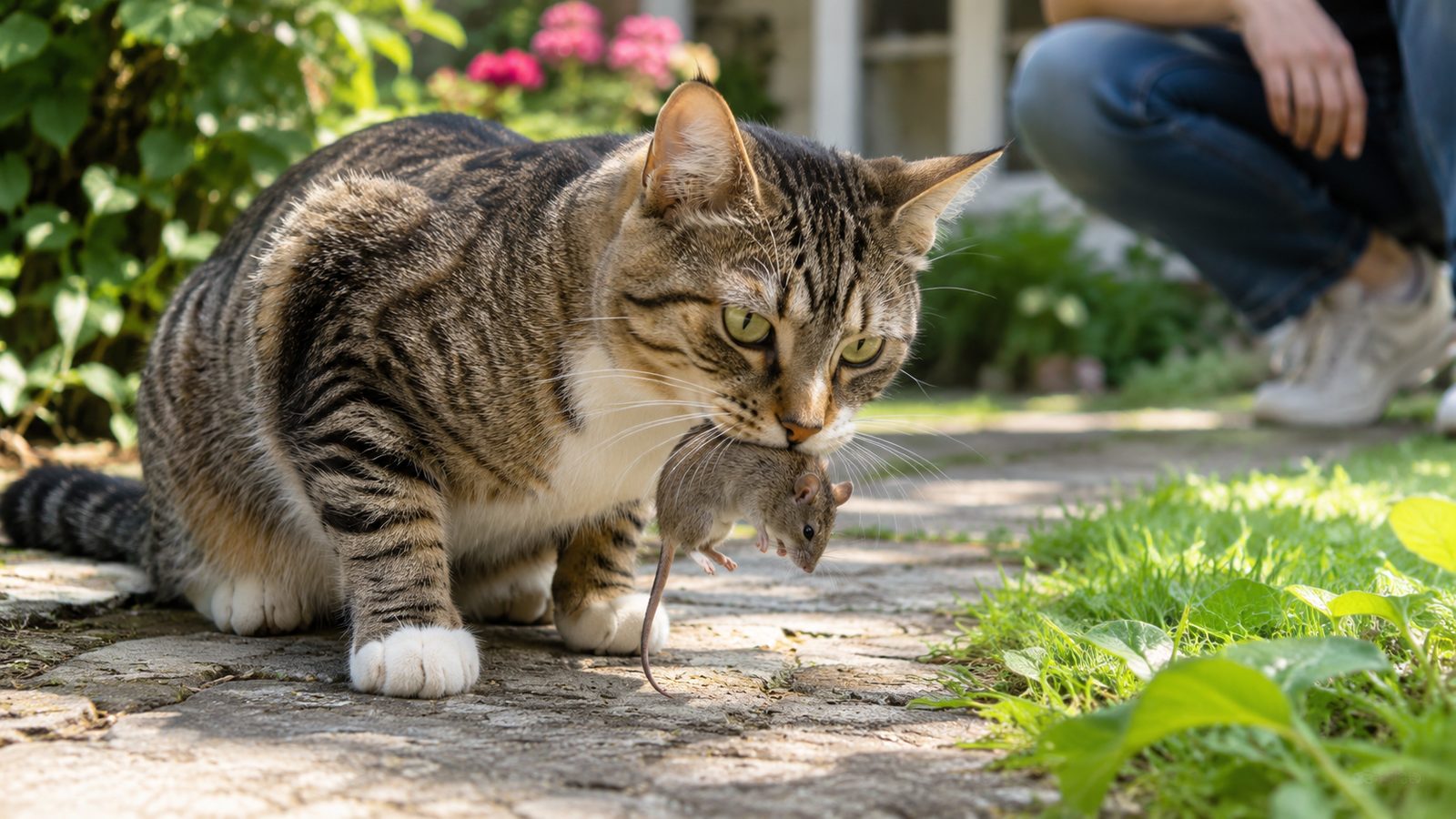
Do cats eat mice? Yes, many domestic felines will eat a mouse after catching it. Others may kill, carry, or play with their prey instead. This behavior comes from hunting instincts rather than poor feeding at home. A well-fed pet can still stalk small animals because hunting and hunger are separate drives. That instinct remains strong in many household felines. Eating wild prey, however, can expose your pet to parasites, disease, injuries, and rodent poison. Quick answer: Domestic felines can hunt, kill, and eat mice even when they receive complete meals at home. The behavior is normal predatory instinct. However, wild rodents may carry parasites or disease, and poisoned prey can create a medical emergency. Owners should discourage hunting and monitor pets after any suspected ingestion.
| Question | What U.S. pet owners should know |
|---|---|
| Will a domestic cat eat a mouse? | Some will eat the whole animal or part of it. |
| Why hunt when food is available? | Hunting instinct operates separately from hunger. |
| Is eating a mouse safe? | Not completely. Parasites, infection, injury, and poison exposure are possible. |
| Should you make your pet vomit? | No, unless a veterinarian specifically instructs you. |
| When should you call a veterinarian? | Call promptly after suspected poison exposure or concerning symptoms. |
| Can indoor pets still hunt? | Yes. A mouse entering the home can trigger predatory behavior. |
Do Cats Eat Mice or Only Hunt Them?
A domestic hunter may eat its catch, but that outcome is not guaranteed. Some pets consume most of the animal. Others leave the prey untouched after catching or killing it. Researchers have documented house mice among prey consumed by free-ranging domestic felines. A 2023 global review found small mammals throughout documented feline diets. House mice also appear among the commonly recorded prey species. Hunting is not proof that your pet is hungry or underfed. Predatory behavior can continue after a normal meal. Animal welfare groups note that hunting motivation can operate separately from hunger.
Why Does Your Cat Hunt Mice?
Predatory behavior involves stalking, chasing, pouncing, catching, and biting. Small rodents naturally trigger several parts of this sequence. Their quick movements and small size make them attractive targets. A household pet does not need wilderness experience to show these behaviors. Play with moving toys often uses the same stalking and pouncing patterns. You can see this instinct during everyday games with wand toys. This also explains why punishment rarely solves hunting behavior. The animal is performing an instinctive action, not breaking a human rule. Writinge’s humane cat training guide explains why redirection works better than fear.
Is It Safe for a Cat to Eat a Mouse?
Eating one rodent does not automatically mean your pet will become sick. Many animals show no obvious problems afterward. Still, wild prey creates risks that commercial food avoids. Rodents can carry intestinal parasites that infect a predator after consumption. Veterinary sources list rodents as transmission hosts for several feline parasites. These include certain roundworms, tapeworms, and stomach worms. Infection can occur through eating infected rodents. Routine veterinary parasite prevention can reduce several risks. Your veterinarian can recommend prevention based on lifestyle and location.
Can Eating a Mouse Cause Toxoplasmosis?
Toxoplasma gondii can use small animals as intermediate hosts. A feline predator may become infected after eating infected prey. The parasite can later be shed through feces for a limited period. Public health guidance states that felines can acquire toxoplasmosis by eating infected rodents, birds, or other small animals. Most healthy people do not develop severe illness. Pregnancy and weakened immune systems require greater caution. Keeping a pet indoors reduces opportunities to hunt infected wildlife. Health guidance also recommends commercially prepared food instead of raw meat. Regular litter cleaning further reduces household exposure risks.
The Biggest Concern: A Mouse That Ate Poison
Rodenticide exposure deserves special attention because the prey may have consumed bait before being caught. Your pet can also reach the bait directly. Both situations require prompt veterinary guidance. Pets can encounter rodenticides through poisoned rodents. Different products affect the body in different ways. Treatment therefore depends on the active ingredient and exposure. Never assume that a small rodent could not contain enough poison to matter. Keep packaging from any pest-control product used around your property. That information can help a veterinarian identify the possible toxin quickly.
What Should You Do After Your Cat Eats a Mouse?
Start by removing any remaining prey without touching it with bare hands. Check the area for bait boxes, pellets, or other pest-control products. Then observe your pet closely for unusual behavior. Do not induce vomiting or give home remedies unless a veterinarian directs you. Some poisoning treatments depend on the specific chemical involved. An incorrect home treatment can delay proper care. Use this response guide after a hunting incident:

| Situation | Recommended response |
|---|---|
| Pet seems normal and no poison is used nearby | Monitor closely and mention the incident at the next veterinary visit. |
| Repeated vomiting or diarrhea develops | Contact your veterinarian for guidance. |
| Pet becomes weak, unusually sleepy, or uncoordinated | Seek veterinary advice promptly. |
| Blood appears in vomit, stool, urine, nose, or mouth | Treat the situation as urgent. |
| Rodent bait may be present | Contact a veterinarian or pet poison service immediately. |
| You know which poison was used | Bring the package or active-ingredient information. |
Should You Let Your Cat Catch Mice in the House?
Using a pet as household pest control creates unnecessary health risks. A mouse infestation also needs a solution beyond occasional hunting. Removing food sources and entry points addresses the underlying problem. Avoid placing loose poison where pets can reach it. Consider pet-safe pest-management methods when possible. Tell any pest-control professional that animals live in the home. Indoor enrichment can also reduce opportunities for wildlife hunting. Scheduled interactive play gives predatory behavior a safer target. The goal is not removing instinct, but directing it appropriately.
Do Indoor Cats Hunt Mice?
Indoor living does not erase hunting behavior. A rodent entering your house may still trigger stalking and chasing. Previous hunting experience is not always necessary. Regular interactive play can give your pet a controlled outlet. Wand toys work well because they imitate moving prey without exposing your animal to wildlife. Store string-based toys after play to prevent accidental swallowing. Readers interested in other feline care topics can browse Writinge’s pet guides. Owners of larger breeds may also enjoy Writinge’s Maine Coon size guide. Both pages provide additional information for everyday pet care.
Why Does a Cat Bring a Dead Mouse Home?
Carrying prey into the home can be part of normal hunting behavior. It does not necessarily mean your pet expects you to eat it. Safe handling matters more than interpreting the gesture. Wear disposable gloves when removing a carcass from your home. Place it inside a sealed bag before disposal. Wash your hands afterward and disinfect any contaminated hard surface. Avoid punishing your pet after finding the prey. The animal will not connect delayed punishment with the earlier hunt. Prevention and controlled play are more useful responses.
How Can You Reduce Mouse Hunting?
Keeping your pet indoors provides the strongest control over wildlife encounters. It also limits contact with roads, predators, and several infectious risks. Secure screened areas can provide outdoor stimulation with less exposure. Use daily play sessions that imitate stalking and chasing. Move toys along the ground instead of repeatedly waving them above the animal. Allow occasional successful catches during play so the sequence feels satisfying. Mouse prevention inside the home also matters. Seal gaps around pipes, doors, foundations, and utility openings. Store human and pet food inside closed containers.
Can Mice Fight Back?
Mice usually try to escape rather than confront a predator. They can still bite when trapped or handled. Bites may create small wounds that owners overlook beneath fur. Check your pet after a close encounter if handling is safe. Look for swelling, tenderness, bleeding, or unusual licking. Contact your veterinarian when you find a wound or notice developing pain. Larger rodents can cause more serious injuries than small house mice. Never encourage direct confrontations with rats or other wildlife. Professional pest control is safer for both animals and people.
Frequently Asked Questions
Do cats eat mice if they are well fed?
Yes, a well-fed pet may still hunt and consume small prey. Hunting motivation does not depend entirely on hunger. Regular meals therefore cannot guarantee that hunting will stop.
Do domestic cats eat the whole mouse?
Some consume nearly the entire animal, while others eat only portions. Individual behavior varies widely between pets. You may also find an intact carcass after the hunt.
Can a mouse make my pet sick?
Yes, although illness does not occur after every incident. Wild rodents can carry parasites and infectious organisms. Poison exposure creates another potentially serious risk.
Should I call a veterinarian after one mouse?
A healthy pet without symptoms may only need careful observation. Contact your veterinarian when symptoms appear or poison exposure is possible. Prompt advice is especially important when you cannot identify nearby pest-control products.
Can mouse hunting give a pet worms?
Yes, some intestinal parasites use rodents as intermediate or transport hosts. Rodents appear in several feline parasite life cycles. Routine parasite control can reduce that risk.
Will having a cat solve a mouse infestation?
Not reliably. Individual pets differ greatly in hunting ability and interest. Sealing entry points and controlling food access provide a more dependable approach.
The Bottom Line
Mouse hunting is a normal part of feline predatory behavior. Your pet may catch prey whether it is hungry or fully fed. Some individuals eat their catch, while others leave it behind. The behavior is natural, but eating wild rodents is not risk-free. Parasites, toxoplasmosis, bite injuries, and rodenticide exposure deserve attention. Indoor living and controlled play can reduce these hazards. If your pet eats a rodent and poison may be involved, contact a veterinarian promptly. Otherwise, monitor for vomiting, weakness, bleeding, appetite changes, or unusual behavior. Continue exploring Writinge’s pet resources for practical care and behavior information. —